
Beri Vape8 min read
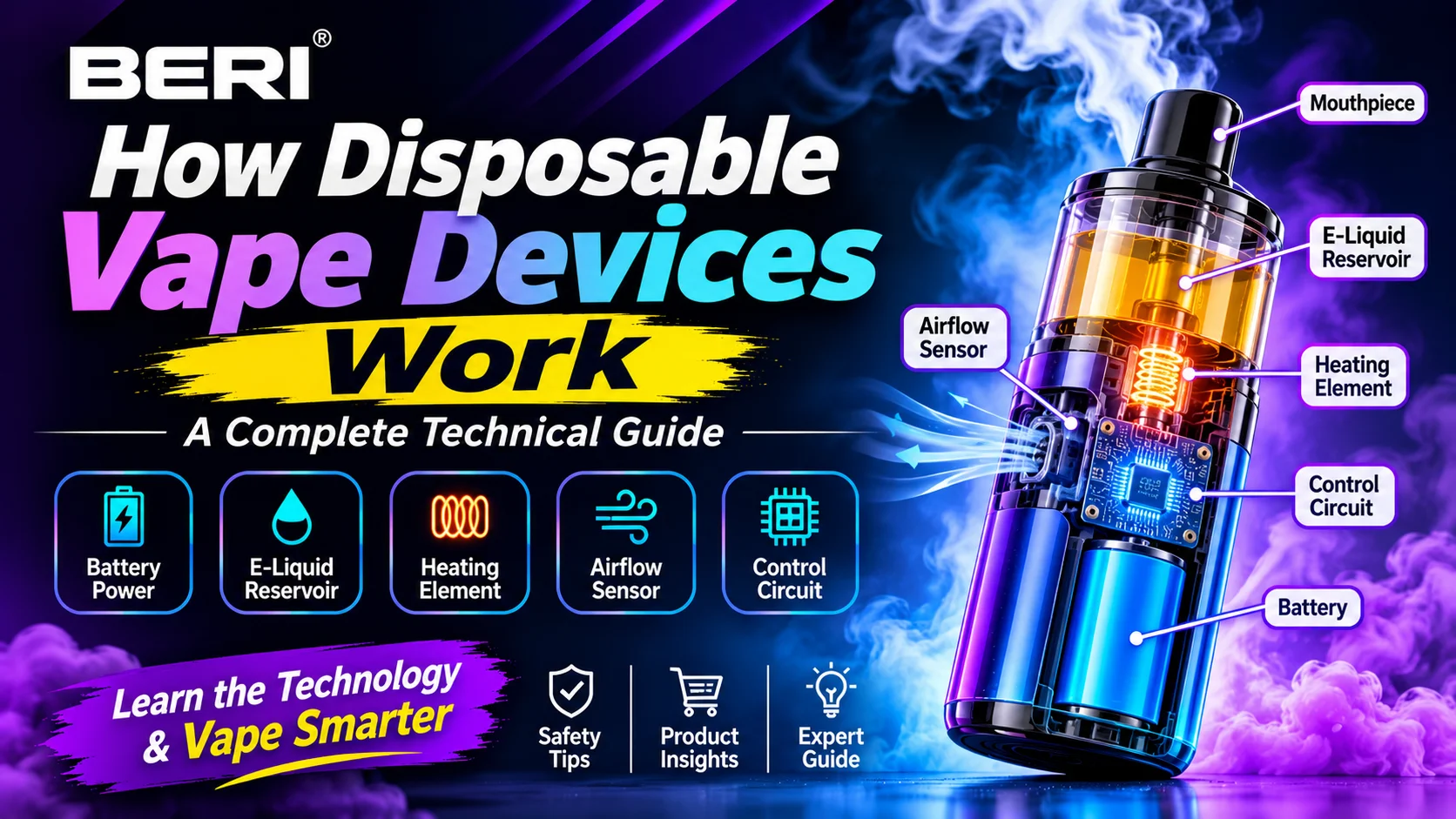
Electronic vaping devices are built using a combination of electrical, mechanical, and electronic components. Disposable vape devices are one category of these products, generally designed with an integrated battery, an e-liquid reservoir, a heating element, and an airflow system.Understanding how disposable vape devices work requires looking at the technology inside their housing. Each component has a specific function, from supplying electrical power to controlling the heating process.
In this guide, we explore the basic engineering behind disposable vape devices, explain their main components, and discuss important safety and regulatory considerations.
What Is a Disposable Vape Device?
A disposable vape device is an electronic vaping product designed as a pre-assembled unit rather than a device with a separately replaceable pod system.
Depending on the model, its internal construction may include:
-
An integrated rechargeable or non-rechargeable battery
-
An e-liquid reservoir
-
A heating element
-
An airflow passage
-
An electronic activation sensor
-
A protective outer housing
These components are assembled within a compact enclosure.Unlike some reusable electronic devices, disposable models are generally intended to be discarded when their usable components reach the end of their designed service life. Rechargeable disposable models may include a charging connection, but this does not necessarily mean that their other components are replaceable.
How Does a Disposable Vape Device Work?
At a basic engineering level, an electronic vaping device converts stored electrical energy into heat.The main processes involve the battery, electronic control system, heating element, and liquid-containing reservoir.
The internal system can be understood through four general stages:
Electrical Power
The battery stores electrical energy and provides power to the device's electronic components.Battery capacity and electrical characteristics vary between models. Some devices use rechargeable lithium-ion batteries, while others are designed around non-rechargeable battery systems.
Electronic Detection
Many electronic vaping devices contain an airflow-activated sensor.This electronic component detects a change in air pressure or airflow and communicates with the control circuitry.The exact sensor design and electronic arrangement depend on the manufacturer and device model.
Heating System
The electronic control system is connected to a heating element.When electrical energy reaches the heating element, electrical resistance produces heat. This process is commonly known as resistive heating.The heating system is one of the central components in an electronic vaping device.
Aerosol Formation
The heating process changes the physical state of some of the liquid present in the device, producing an aerosol.Aerosol is not simply water vapor. It can contain nicotine, flavoring chemicals, solvents, and other substances depending on the product formulation.The composition and concentration of these substances vary between products.
Main Components Inside a Disposable Vape
Understanding the individual components provides a clearer picture of the technology.
A. Battery
The battery is the electrical power source.It supplies energy to the electronic circuitry and heating element. Its specifications can include:
-
Battery chemistry
-
Nominal voltage
-
Capacity measured in mAh
-
Charging characteristics, where applicable
-
Electrical protection features
Battery design is important because it influences the device's electrical characteristics and overall construction.
Heating Element
The heating element is responsible for converting electrical energy into heat.Different electronic vaping products use different heating-element designs. Common designs include metal wire and mesh-based heating elements.Mesh heating elements use a shaped metal structure rather than a conventional round wire.
C. E-Liquid Reservoir
The reservoir is the internal compartment that contains the e-liquid.Its capacity is generally measured in millilitres (mL).Depending on the device, the reservoir may be made from transparent or opaque materials. Its construction and capacity are determined by the product design.
D. Airflow Sensor
The airflow sensor is an electronic component used in many draw-activated devices.It detects changes in airflow and communicates with the electronic control system.Not every disposable vape uses the same sensor design, and the internal electronic architecture can differ considerably between manufacturers.
E. Control Circuit
The control circuit manages electrical communication between the device's components.Depending on the model, its functions may include power regulation, activation detection, battery monitoring, and protective electronic controls.
F. Outer Housing
The outer housing contains and protects the internal components.Manufacturers may use different materials depending on product dimensions, weight, structural requirements, and design specifications.
Understanding Different Heating Element Designs
Heating-element technology is an important part of electronic vaping device engineering.Two commonly discussed designs are conventional wire coils and mesh coils.
Traditional Wire Coils
Traditional wire coils use a metal wire formed into a coil-shaped structure.Their electrical resistance allows the heating element to produce heat when electrical current passes through it.
Mesh Coils
Mesh coils use a mesh-shaped metal heating element.Their physical structure differs from conventional round-wire coils. Some products also use multiple mesh elements as part of their internal configuration.The term dual mesh generally refers to two mesh heating elements within a specified design.Actual construction and technical performance depend on the manufacturer's engineering specifications.
Understanding Battery Technology
Battery technology is an important consideration in portable electronic devices.Many rechargeable electronic vaping devices use lithium-ion battery technology because of its rechargeable characteristics and relatively compact construction.Battery capacity is commonly expressed in milliampere-hours (mAh).
However, battery capacity alone does not determine how long an electronic device operates. Other factors include:
-
Electrical power requirements
-
Battery age and condition
-
Operating temperature
-
Electronic circuit design
-
Charging and protection systems
Lithium-ion batteries require appropriate handling because physical damage, overheating, and unsuitable charging conditions can create safety risks.
Disposable Vape Devices vs. Reusable Pod Systems
Disposable vape devices and reusable pod systems have different product architectures.
| Feature | Disposable device | Reusable pod system |
|---|---|---|
| General design | Integrated product | Separate battery and pod |
| Battery | Usually integrated | Usually rechargeable |
| Pod replacement | Generally not designed for routine replacement | Designed for compatible replacement pods |
| Housing | Usually integrated | Often designed for repeated use |
| Maintenance | Limited | Varies by model |
| Product lifespan | Limited by designed service life | Depends on device and component replacement |
The exact design varies by manufacturer, so this table describes general product categories rather than every individual model.
Why Do Disposable Vape Devices Have Different Specifications?
Disposable electronic devices are available in different sizes and technical configurations.Their specifications can vary because manufacturers use different combinations of electrical components, reservoir designs, heating elements, and electronic controls.
Important specification categories include:
Battery capacity: Describes the rated electrical charge storage capacity.
E-liquid capacity: Describes the volume of liquid contained in the reservoir.
Coil configuration: Describes the construction of the heating element.
Charging connection: Identifies the charging interface on rechargeable models.
Display technology: Describes whether the product contains an electronic display and its supported functions.
Airflow design: Describes the structural arrangement of the device's air passages.
These measurements describe different parts of a product and should not be treated as interchangeable performance indicators.
Safety Considerations for Electronic Vaping Devices
Electronic vaping devices contain electrical components and may contain nicotine-containing liquids. Understanding their potential risks is important.
Some important considerations include:
-
Lithium-ion batteries can present fire and overheating risks if damaged.
-
Nicotine is addictive and can cause poisoning if accidentally swallowed or absorbed.
-
Aerosols can contain harmful substances.
-
Electronic devices should be kept away from children and pets.
-
Devices should not be opened, modified, or physically damaged.
-
Electronic waste and batteries should be disposed of according to local regulations.
Nicotine-containing products are not safe for non-users, young people, or pregnant individuals. People who do not currently use nicotine should not start.
9. Environmental Considerations
Disposable electronic devices create waste because their batteries, electronic circuitry, and outer housings are combined in a compact product.Improper disposal can contribute to electronic waste and battery-related environmental hazards.Depending on local regulations, these products may require specialized electronic waste or battery collection.Consumers should consult local waste-management authorities for appropriate disposal requirements rather than placing electronic devices in ordinary household recycling.
Conclusion
Disposable vape devices combine several technologies within a compact electronic system. Their basic architecture can include a battery, heating element, liquid reservoir, airflow sensor, electronic control circuitry, and protective housing.Understanding these components helps readers interpret product specifications and recognize the differences between disposable devices and reusable pod systems.Battery safety, nicotine-related health risks, environmental disposal, and local regulations are also important considerations when researching electronic vaping technology.
About Beri Vape Shop – Your Online Vape Retail Store
Beri Vape Shop is an online retail store offering BERI-branded vaping products and related accessories. We provide customers with access to our product range through our online store, along with detailed product information and specifications to help visitors understand the products listed on our website.
In addition to online retail, Beri Vape Shop maintains an informative blog covering electronic vaping technology, product specifications, device components, compatibility information, and industry-related topics.
Whether you are researching product specifications or exploring our online product catalog, Beri Vape Shop brings product information and online retail together in one place.
Visit Beri Vape Shop to explore our online store and read more educational articles on our blog.
"Alongside its educational content, Beri Vape Shop is an online retail store providing product listings and information about BERI-branded products."
Frequently asked questions
How does a disposable vape device work?
A disposable electronic vaping device generally uses a battery, electronic control system, heating element, and e-liquid reservoir. Electrical energy is converted into heat, which produces an aerosol from the liquid.
What are the main components of a disposable vape?
Common components include an integrated battery, heating element, e-liquid reservoir, airflow sensor, electronic control circuit, and outer housing.
What does an airflow sensor do?
An airflow sensor detects changes in air pressure or airflow and communicates with the device's electronic control system.
What is a mesh coil?
A mesh coil is a heating element made from a mesh-shaped metal structure rather than a conventional round wire.
Are all disposable vape devices rechargeable?
No. Some models have integrated rechargeable batteries, while others are designed with non-rechargeable batteries.
What does mAh mean in battery specifications?
Milliampere-hours (mAh) are a measurement of electrical charge capacity. It is commonly used to describe the rated capacity of portable batteries.
What is the difference between disposable and reusable pod systems?
Disposable devices are generally supplied as integrated units with limited replacement options. Reusable pod systems are designed around a rechargeable battery and compatible replaceable pods.
Are disposable vape aerosols just water vapor?
No. Aerosols produced by electronic vaping devices are not simply water vapor. Their composition can include nicotine, solvents, flavoring chemicals, and other substances.